





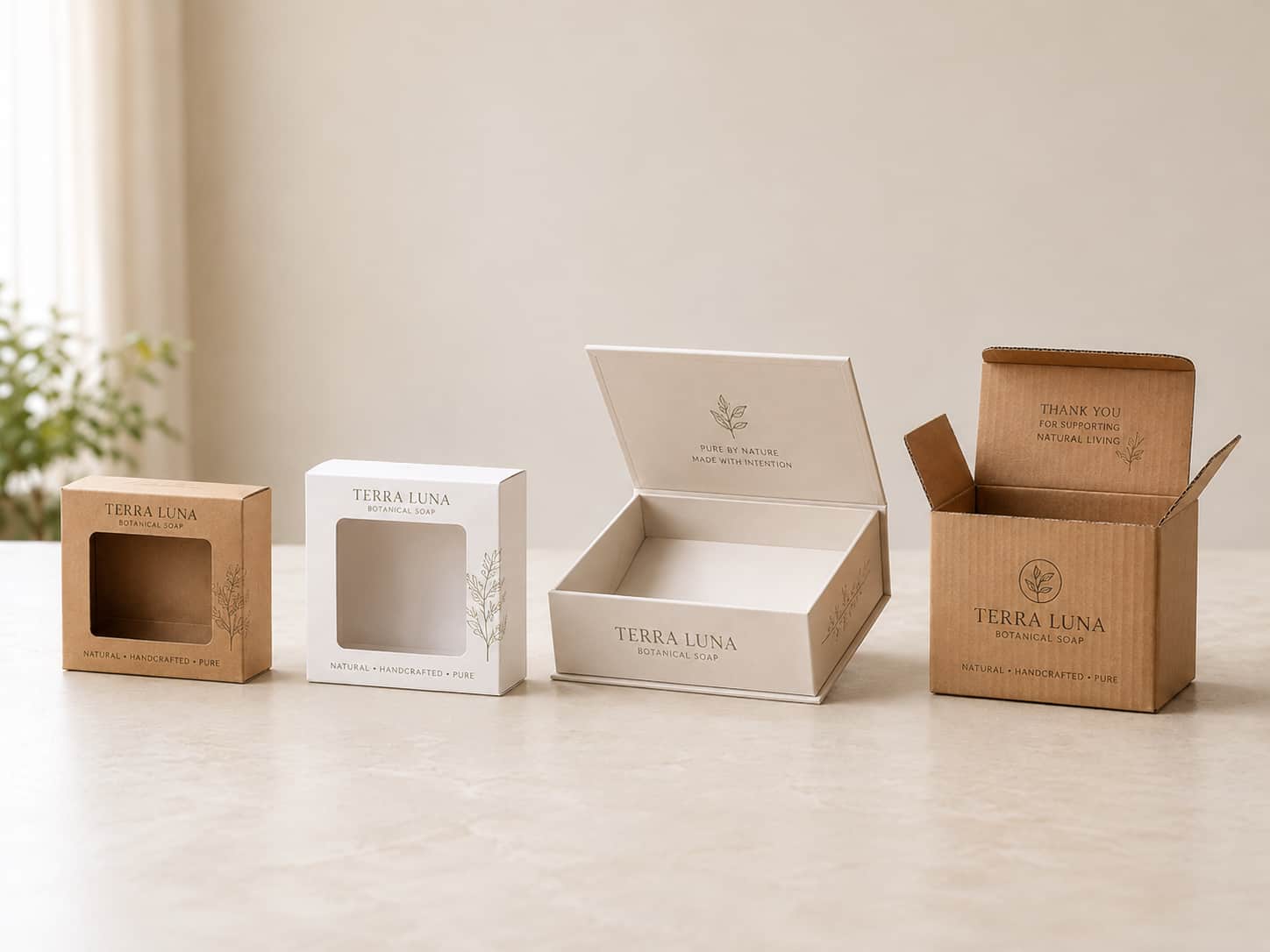
Picking a soap box material feels like it should be simple — until you’re staring at four options that all claim to be “durable” and “eco-friendly.” Each material actually behaves differently in production, on a shelf, and in transit, and the right choice depends on where your soap is going: a boutique shelf, a subscription mailer, or a pallet headed to a retailer’s warehouse. Here’s what genuinely separates these four materials, so you can pick based on what your soap and your business actually need — not just which box looked nicest in a supplier’s photo.
Kraft Paperboard: The Default for Handmade and Organic Soap
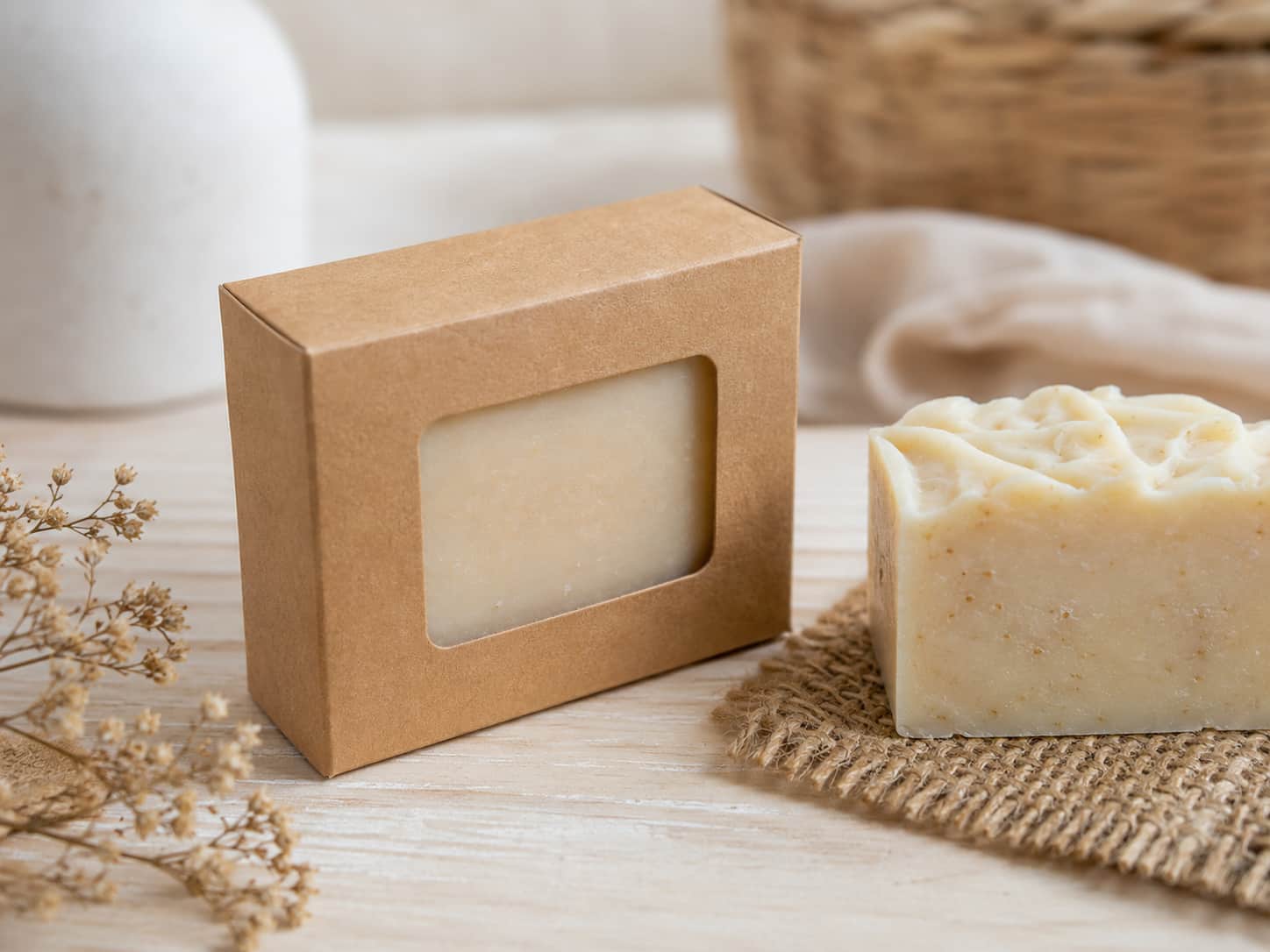
Kraft is uncoated, natural-brown paperboard, and it’s the most common soap box material for a reason: it’s recyclable, inexpensive at low volumes, and its natural texture visually signals “handmade” or “organic” before a customer reads a word of copy. It also comes in a bleached white version if you want the recyclable, uncoated benefit without the rustic brown look — a common choice for brands that want a cleaner, more clinical shelf presence without switching materials entirely.
Kraft takes both offset and digital printing well, though ink colors read slightly muted against the natural brown stock compared to how they’d look on white cardboard — something worth accounting for if your branding leans on bright, saturated colors. Foil stamping and embossing both work on kraft and tend to look especially striking against the matte, natural surface, which is part of why so many premium “natural” soap brands lean on gold or copper foil rather than full-color print.
Best for: handmade, organic, and small-batch soap brands where the material itself is part of the branding, and where a slightly muted print palette isn’t a dealbreaker.
Trade-off: kraft alone isn’t the sturdiest option for rough handling or long-distance shipping. If you’re shipping direct-to-consumer, pair a kraft retail box with a corrugated outer mailer rather than relying on the kraft box alone to survive transit.
Cardboard: The Everyday Workhorse
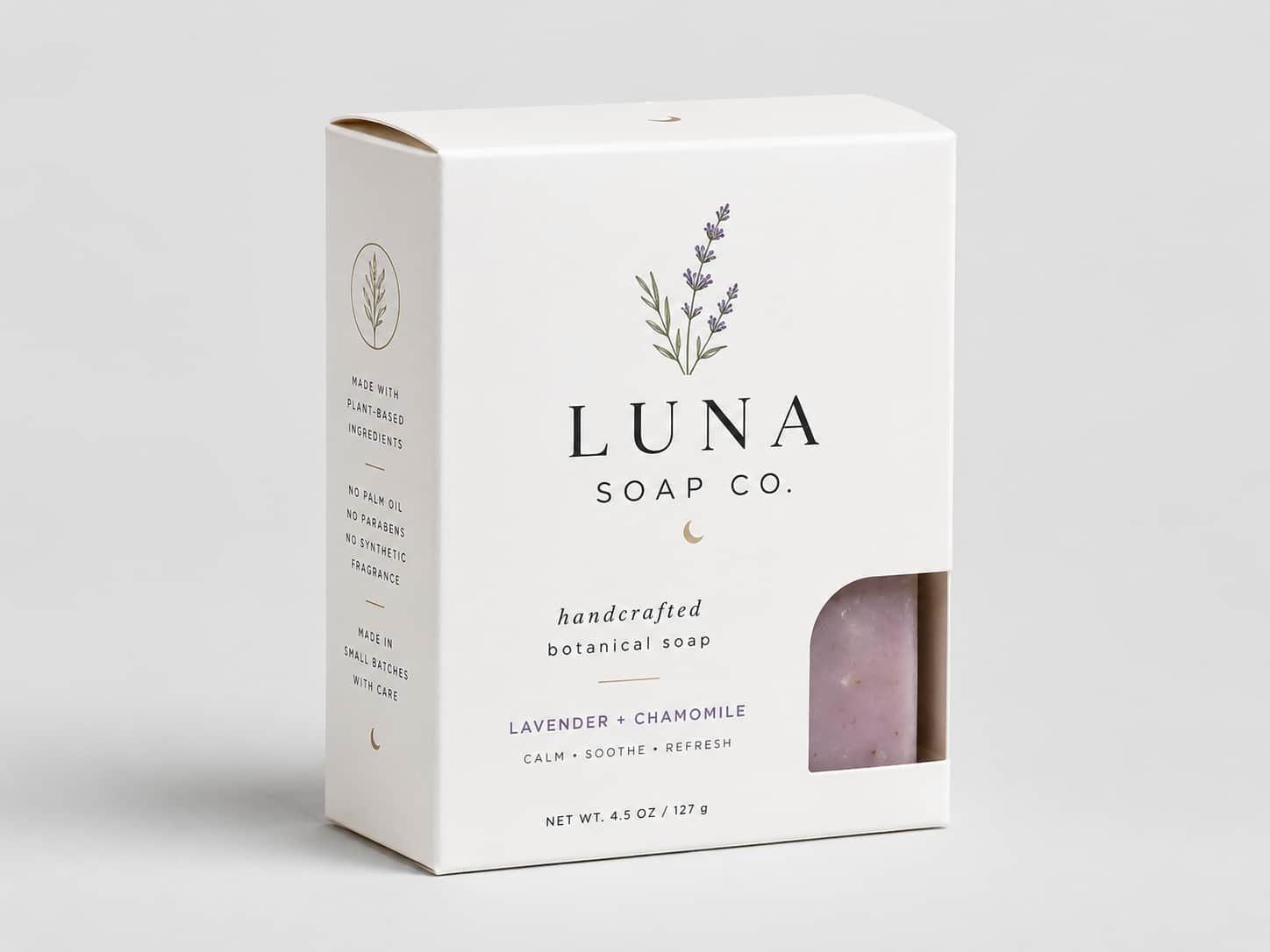
Standard cardboard (folding carton stock) is lighter than kraft, holds print detail and color saturation better, and is the most cost-effective option for retail-ready boxes at volume. It’s the material most soap brands land on once they move past small-batch, farmers-market-style production into consistent retail runs where full-color branding and shelf consistency matter more than a natural-material look.
Cardboard also takes lamination well — matte or gloss — which is useful if you want a more polished, “finished” feel than kraft’s uncoated texture provides. This is the material most likely to appear on a drugstore or big-box retail shelf, because it balances cost, print quality, and structural consistency across a large production run.
Best for: retail shelf presence at scale, brands that want full-color branding rather than a natural-material look, and anyone reordering the same design repeatedly where consistency between print runs matters.
Rigid Stock: For Gift Sets and Premium Lines
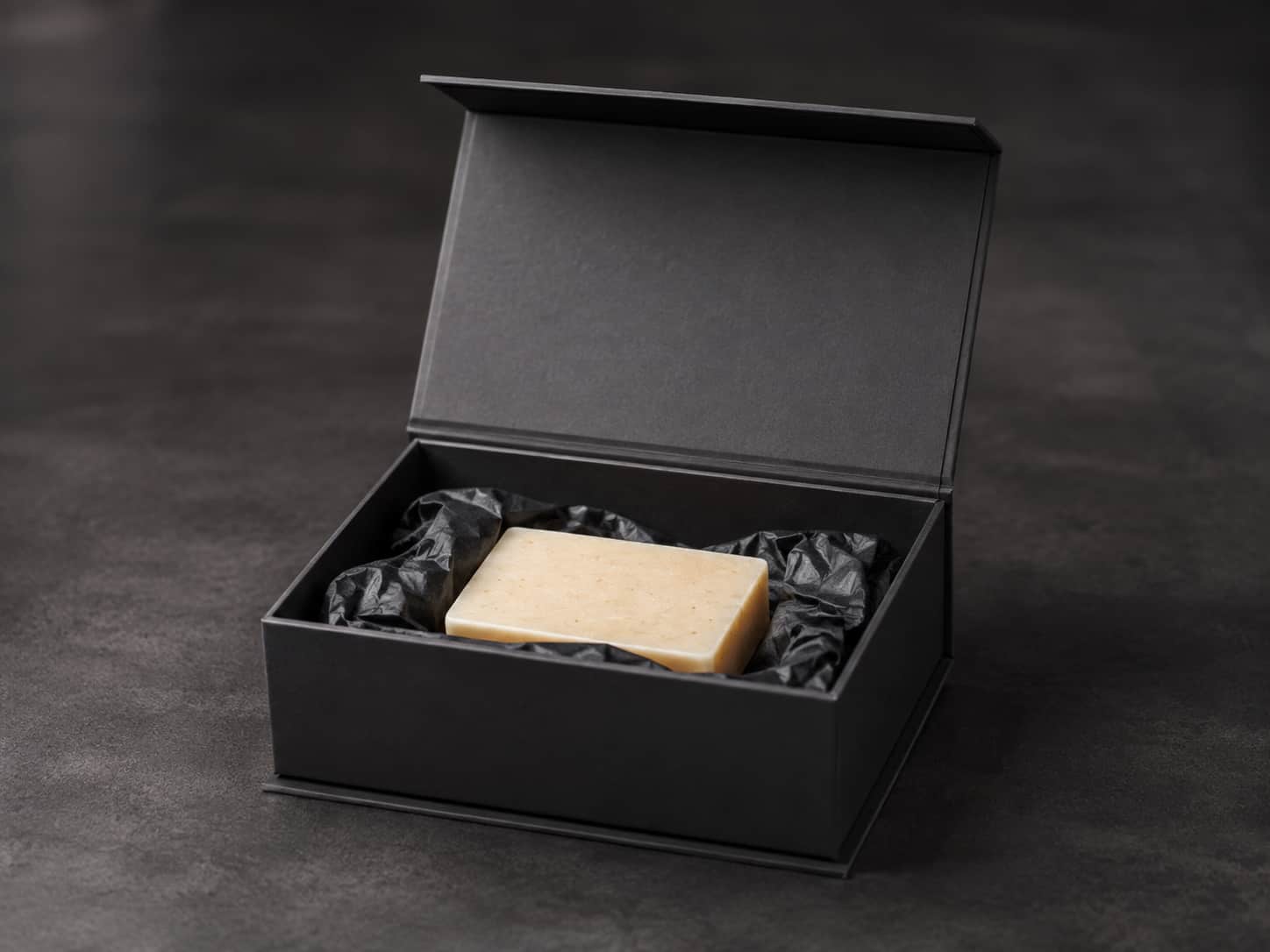
Rigid boxes use a thicker, non-folding board — the same category used for luxury cosmetics and electronics packaging — wrapped in a printed or textured outer paper rather than printed directly. For soap, this shows up most often in multi-bar gift sets, holiday collections, and premium spa lines where the box itself is part of the unboxing experience, not just protection getting the product to the shelf.
Rigid construction supports magnetic closures, ribbon pulls, and custom inserts that hold multiple bars in place — features that don’t make sense on a single-bar retail box but genuinely elevate a gift set. The trade-off is cost: rigid setup boxes run meaningfully higher per-unit than kraft, cardboard, or corrugated, because they’re built from a heavier board and typically hand-assembled or semi-automated rather than run through a fully automated folding-carton line.
Best for: gift sets, holiday collections, and premium/spa-positioned soap lines where the packaging itself signals price point.
Trade-off: higher cost per unit than kraft or cardboard — reserve it for products where the margin and positioning support the extra spend.
Corrugated Board: Built for Shipping and Bulk
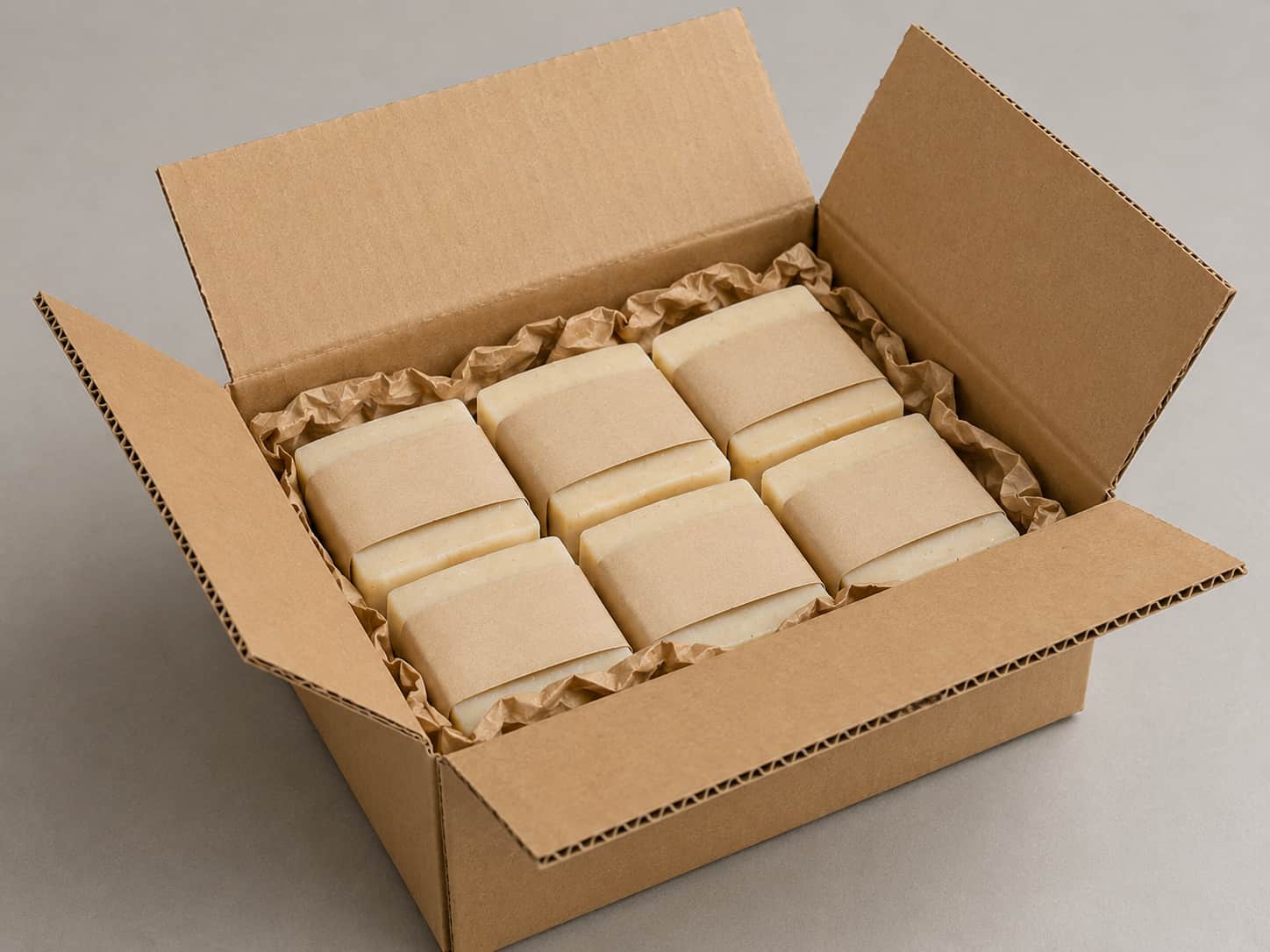
Corrugated has a fluted inner layer sandwiched between two liner sheets, which is what gives it real crush resistance — the reason it’s the standard material for shipping cartons across almost every industry, not just cosmetics. For soap specifically, corrugated shows up as outer shipping cartons for wholesale orders, bulk cases sent to retailers, and protective mailers wrapped around a lighter kraft or cardboard retail box for direct-to-consumer shipments.
It’s rarely the retail-facing box a customer sees on a shelf — it’s the layer that gets your product there intact. Corrugated is available in different flute sizes, which affects both strength and thickness; a finer flute keeps the box slimmer for smaller items, while a heavier flute is worth it for anything fragile or shipping long distances.
Best for: bulk shipping to retailers, wholesale distribution, and as protective outer packaging for e-commerce orders — anywhere durability matters more than shelf aesthetics.
Which Material Should You Actually Pick?
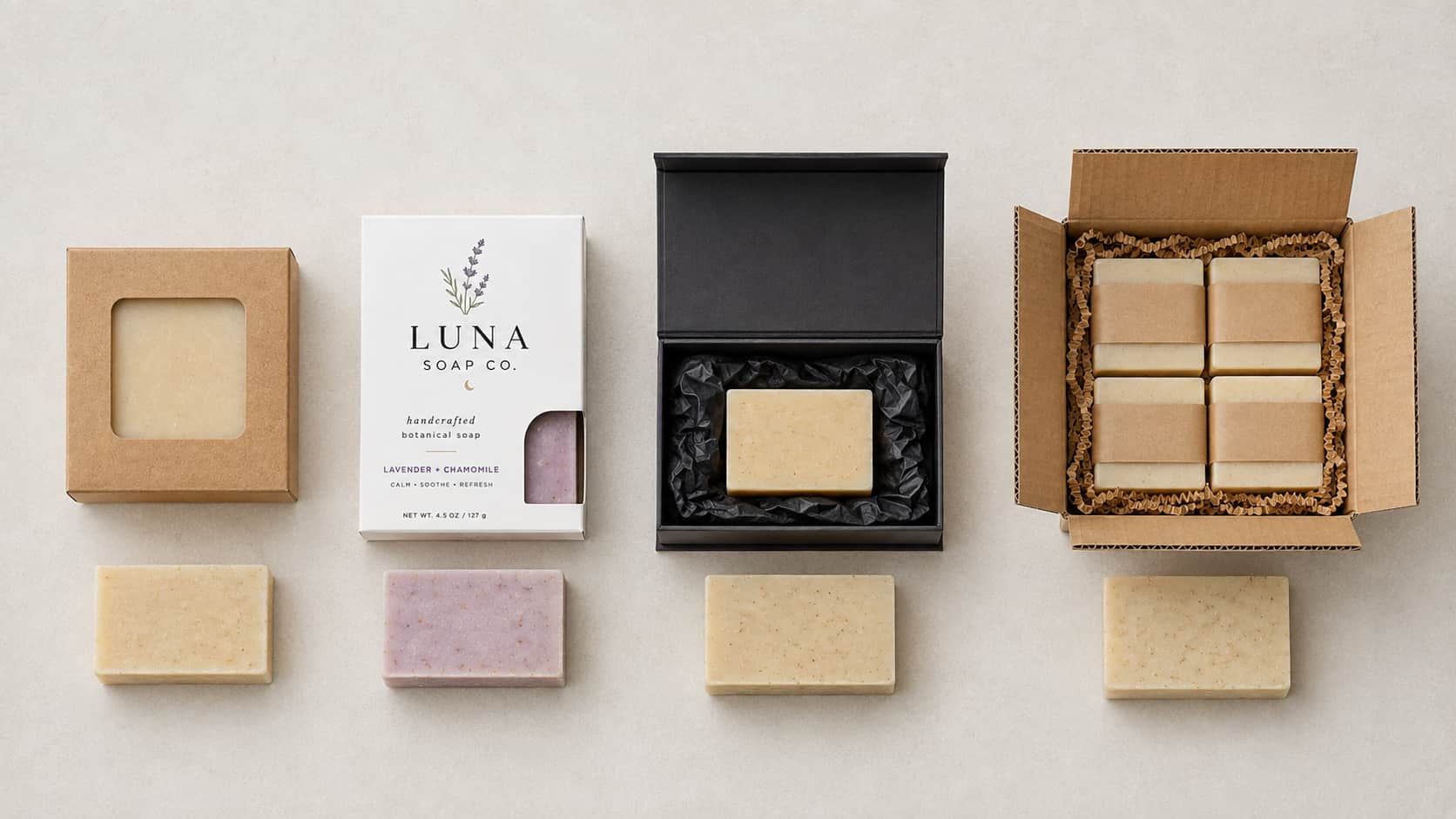
- Launching a handmade or organic line? Start with kraft — it’s the lowest-cost entry point, and the natural look matches the positioning most small-batch soap brands are going for.
- Moving into consistent retail? Cardboard gives you full-color branding and print consistency at a manageable cost per unit.
- Building a gift set or premium collection? Rigid stock earns its higher cost through presentation — save it for products where that investment shows up in the price tag.
- Shipping wholesale in bulk, or direct-to-consumer over long distances? Corrugated protects the product where it actually needs protecting, either as the shipping carton itself or as an outer layer around a lighter retail box.
Many soap brands end up using more than one material across their line — kraft for the everyday bar sold in-store, corrugated for the case that ships it there, and rigid for the once-a-year holiday gift set. That’s normal, efficient sourcing, not overcomplicating things.
Frequently Asked Questions
Is kraft or cardboard more eco-friendly? Both are recyclable; kraft is typically uncoated and made from a higher proportion of unbleached material, which is why it’s the default “eco” choice, though a recyclable cardboard box is a genuinely sustainable option too — the honest answer is that either can be a responsible choice depending on your finishing and lamination choices.
Can I mix materials — kraft with a rigid insert, for example? Yes, this is common for gift sets that want the natural kraft look on the outside with a sturdier internal structure or insert to hold multiple bars securely.
Does the material affect print quality? Yes — cardboard and rigid stock (both typically printed on a white or coated surface) hold saturated, bright colors better than uncoated kraft, where colors read slightly more muted against the natural brown base.
What’s the minimum order to try a new material? At WOW Cosmetic Boxes, orders start from just 100 boxes across all four materials, so you can test a material on a smaller run before committing to a full production order.
Can I get the same box style in more than one material? In most cases, yes — styles like sleeve boxes and tuck-end boxes can typically be produced in kraft, cardboard, or corrugated, giving you the flexibility to keep your structural design consistent while changing material based on the specific product or use case.
See our full range of custom soap boxes in any of these materials, or request a free quote with your bar dimensions and preferred material.